


THE BLOWBACK FILES
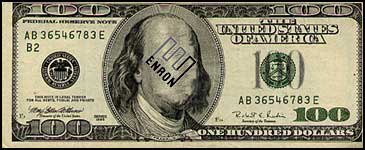
The Constitution of the United States (To see the entire text of the Constitution, go to: http://lcweb2.loc.gov/const/const.html ) gives Congress all the lawmaking powers of the federal government. Expressed powers of Congress are listed in Article I, Section 8 of the Constitution which outlines that Congress has the power to deal with subjects such as declaring war, taxation, borrowing money, foreign and domestic commerce, national defense, weights and measures, coinage, and the courts.
Founders of the Constitution established a form of government that establishes rights and liberties of the American people. Political participation in this process is critical for democracy to work effectively. In recent decades however, Americans have lost interest in this. Voter turnout in national elections was at a high point in the early 1960s. By 1990, the turnout had declined by nearly a quarter.
The founders of the United States envisioned that citizens would elect each member of Congress and those members of Congress would serve and represent the desires of his/her constituents, or, the voters he/she represents. However, money from corporations and special interest groups have also influenced the views and desires that a member of Congress works for or against, ultimately affecting the way they vote on a piece of legislation, which can become law.
But money also influences the Executive Branch. Resident Bush, as a candidate, raised more than $190 million for his presidential campaign. Major contributions came from corporations and political action committees that seek to influence the legislative agenda and influence policy in Washington. The oil and gas industry donated nearly $2 million to Bush's campaign, the automotive industry donated $1.6 million and the automotive industry nearly $1.3 million. Such donations are incentives to return favors when a candidate gets elected.
You don't need to follow politics closely to figure out how an individual or group influences policy. Donate to political campaigns. Sit back. And wait for the right opportunity to raise your issue with the candidate-turned-elected official. The "gift" of a campaign donation will quickly be reciprocated with access to the politician to discuss tax breaks, award contracts and the reduction of regulations. George W. Bush's presidential campaign serves as a useful illustration.
Bush took in a record $190+ million dollars to finance his stealing of the Oval Office. According to the Center for Responsive Politics, some of the top contributors to the Bush campaign include MBNA Corp, Ernst & Young, Andersen Worldwide, PricewaterhouseCoopers, Citigroup, and Enron. A close look at policies and initiatives coming out of the White House in Bush's first year in office helps one understand the pull that these large contributors have in setting the White House's priorities. Within his first 100 days in the White House, Bush was already making good with his major campaign contributors.
Banks:
MBNA America Bank president, Charles Cawley, hosted an evening party at
his home in Kennebunkport, Maine with more than 200 guests attending and
guest of honor, George W. Bush. Guests wrote $1,000 checks to underwrite
Bush's stealing of the White House. Additionally, employees of MBNA donated
more than $240,000 to the campaign in 1999-2000 and Cawley raised at least
$100,00 for the campaign. Within weeks of Bush's entry into the White House,
MBNA championed legislation that would make it more difficult for consumers
to erase their debts. The bank and other major credit cards could make tens
of millions of dollars from the legislation.
Environment:
Within his first 100 days in office, Bush made big strides to cut environmental
initiatives including a cutting funding for renewable energy research, banning
private lawsuits which force the government to add to plants and species
to the endangered species list, reducing the amount of arsenic in water,
and withdrawing the United States from the international global warming
treaty, the Kyoto Protocol. The most controversial initiative that so far
seems to have failed is Bush's roughshod effort to drill for oil in the
Arctic National Wildlife Refuge, which arguably will only produce enough
oil for six months of gas-guzzling American consumption patterns in addition
to threatening calving grounds for the Porcupine Caribou herds. The caribou
are the Gwi'chin peoples source of survival; their diet is based on the
caribou and their native culture is based on their relationship with these
animals.
So, who stands to benefit from these policies? In total, the oil and gas industry which gave more than $1.8 million in individual and PAC contributions to the Bush campaign. The automotive industry gave more than $1.3 million and the timber industry gave almost $300,000, according to the Center for Responsive Politics. Also, Vice Resident DICK Cheney made more than $36 million in 2000 as CEO of the oil services company, Halliburton. DICK Cheney's energy task force, whom the members were secret and not revealed to the public or Congress, which has recommended, among other environmentally dangerous initiatives, looking for more oil in the Pacific West. However a lawsuit from the Government Accounting Office (GAO) and private groups may force DICK Cheney to disclose the information.
Health Care:
The Bush administration has developed their own version of the Patients
Bill of Rights which allows patients to sue their HMO for up to $750,000
in damages, a huge cut from the originally established $5 million. The HMO
industry vehemently opposed the legislation outlining the $5 million cap.
Coincidentally, the HMO industry made Bush one of their top recipients for
campaign contributions in 2000. The pharmaceutical industry has been lobbying
against the expansion of Medicare to include benefits for prescription drugs,
which many inside the industry fear could impose price controls on prescription
drugs. The industry donated nearly $500,000 to the Bush campaign. Consequently,
the Bush administration has sponsored a proposal worth $153 billion over
the next ten years that would seek to address problems of rising drug costs,
which increasingly limit access to needed prescription drugs for the poor
and the elderly.
The pharmaceutical industry has also used the September 11, 2001, attacks as an opportunity to further push Congress to waive the Food and Drug Administration's (FDA) oversight of the industry should a public health emergency break out. While the FDA currently sets the quality standards and requires manufacturers to test and label drugs and vaccines. The drug industry is also required to notify the government of any adverse side effects that the drugs cause, which the industry claims would slow its ability to respond to a crisis situation.
Agriculture:
While America's farmers took a blow to the wallet when Bush came into office,
many corporations in the international agriculture sector would benefit
greatly from Bush's proposals. Bush's budget proposal suggests cutting spending
for the US Department of Agriculture by seven percent over the next year
in addition to cutting spending for conservation programs and rural development
initiatives. Bush's proposal however, suggests a six- percent increase in
funding for the Foreign Agricultural Service, which assists in facilitating
international trade. Kraft Foods, a subsidiary of Philip Morris, would potentially
benefit from this increase as they export their foods to 140 countries.
Philip Morris donated $35,000 to the Bush campaign and more than $2 million
in soft money to the GOP in the 1999-2000-election cycle.
Conclusion:
Upon reviewing the facts, it is easy to conclude that big money controls
politics. Certainly, looking at Bush's record so far, it is evident that
big contributions yield big favors as a payback. While donations from individuals
and corporations help get someone into office, there is another force on
Capitol Hill: Lobbyists. Lobbyists try to influence the way lawmakers vote.
While the Federal Regulation of Lobbying Act of 1946 requires individuals
and groups trying to influence legislation to register and submit quarterly
reports (outlining their receipts, expenditures and the bills they are interested
in), lobbying also takes another form in terms of campaign contributions
to candidates and congressional committees. The Center for Responsive Politics
estimated that companies, labor unions, and other organizations spent $1.45
billion on lobbying government officials in 1999. Leading industries leading
the lobbying efforts in Washington include energy and natural resources,
communications, health (including the pharmaceutical industry), transportation,
finance/insurance, and real estate.
When one fourth of the American population votes, it leaves a lot of room for other institutions and organizations to have influence. Truly, the big money of corporations and special interest has contributed to the demise of the notion of voting as a civic duty. But if we no longer view voting as a civic duty, what rallies the American people to action? Look around you. Shopping. Consuming. Driving. Watching TV. Vanity. Anything but getting involved in issues and events that directly impact your life. Watch television and you will be sold ideas of what you should look life, act like, dress like, and be like. Look up from the television and see ads on bathroom doors, subway stops, bus stops, magazines, and the internet selling you the same images and ideas that the commercials do.
But if you try to watch the news, corporatization is there too. Disney owns ABC. Time Warner owns CNN. General Electric owns NBC. The information presented in the news represents the boundaries set by the "respectable debate" so that you don't have too much information to make decisions for yourself about what your government is doing, what corporations are really doing, and what individual citizens are doing to protest the sale of democracy to corporate America. This is how Cokie Roberts could say that there was no opposition to the war "that mattered" (and why she sucks ass). This is why Dan Rather soon after 9/11/2001 said that Bush was his President (and why he sucks ass).